

Sharing the world through stories
SHAPES was created to help you bring gentle, meaningful stories from many cultures into your child’s everyday life.
Why folktales?
Folktales are some of the oldest stories in the world, carried from one generation to the next like precious treasures. They’re simple enough for young children, yet full of gentle wisdom.
At SHAPES, we love folktales because:
• They connect children to cultures around the world.
A story from Japan or Ghana or Peru becomes a little window into someone else’s home, traditions, and way of seeing the world.
• They speak to children in clear, timeless ways.
Kindness, courage, sharing, helping others — folktales wrap these ideas in characters and adventures that feel alive, even today.
• They encourage imagination and play.
Talking animals, magical forests, clever children… folktales invite little ones to picture big, colourful worlds.
• They make storytelling feel natural and shared.
You don’t need special props or long explanations — just a story, a moment, and someone to enjoy it with.
Folktales help children grow curious, thoughtful, and open-hearted — and that’s why SHAPES is built around them.
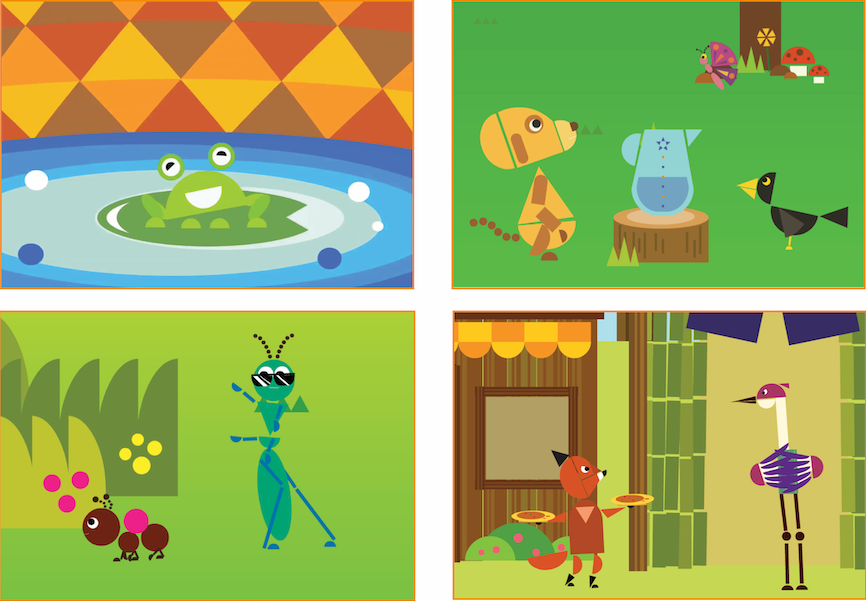
Tips for Storytime
Watch or read together when you can.
Even a short 3–5 minute story feels richer when shared side by side.
Pause and wonder out loud.
“What do you think will happen next?” or “How do you think she feels?” helps little minds slow down and connect.
Let your child retell the story in their own words.
It doesn’t have to be perfect — this builds language, confidence, and imagination.
Connect the story to everyday life.
“Remember how the turtle helped his friend? Who did you help today?”
End with a feeling, not a lesson.
You don’t need to explain everything. Sometimes a simple
“I liked that story… what did you like?”
is enough.
Screen Time, the SHAPES Way
Screen time can be meaningful when it’s shared, guided, and connected to real-world play.
Here’s how we design SHAPES stories for a positive, calm experience:
1. Watch together whenever possible.
Children learn best when an adult is nearby to smile, react, or cuddle along.
2. Talk a little after the story.
A short chat — “Why did the mouse help the lion?” — turns passive watching into real thinking.
3. Draw or play after watching.
Pick a moment from the story to draw, act out with toys, or pretend-play.
This helps children process the story in their own way.
4. Keep them short and gentle.
SHAPES stories are only a few minutes long, with soft narration and simple visuals, designed for preschool attention spans.
5. Let stories spill into everyday moments.
At the playground, over dinner, or before bed — stories become richer when they echo into daily life.
Screen time doesn’t have to be “just watching.”
With SHAPES, it becomes connection, imagination, and shared family time.